
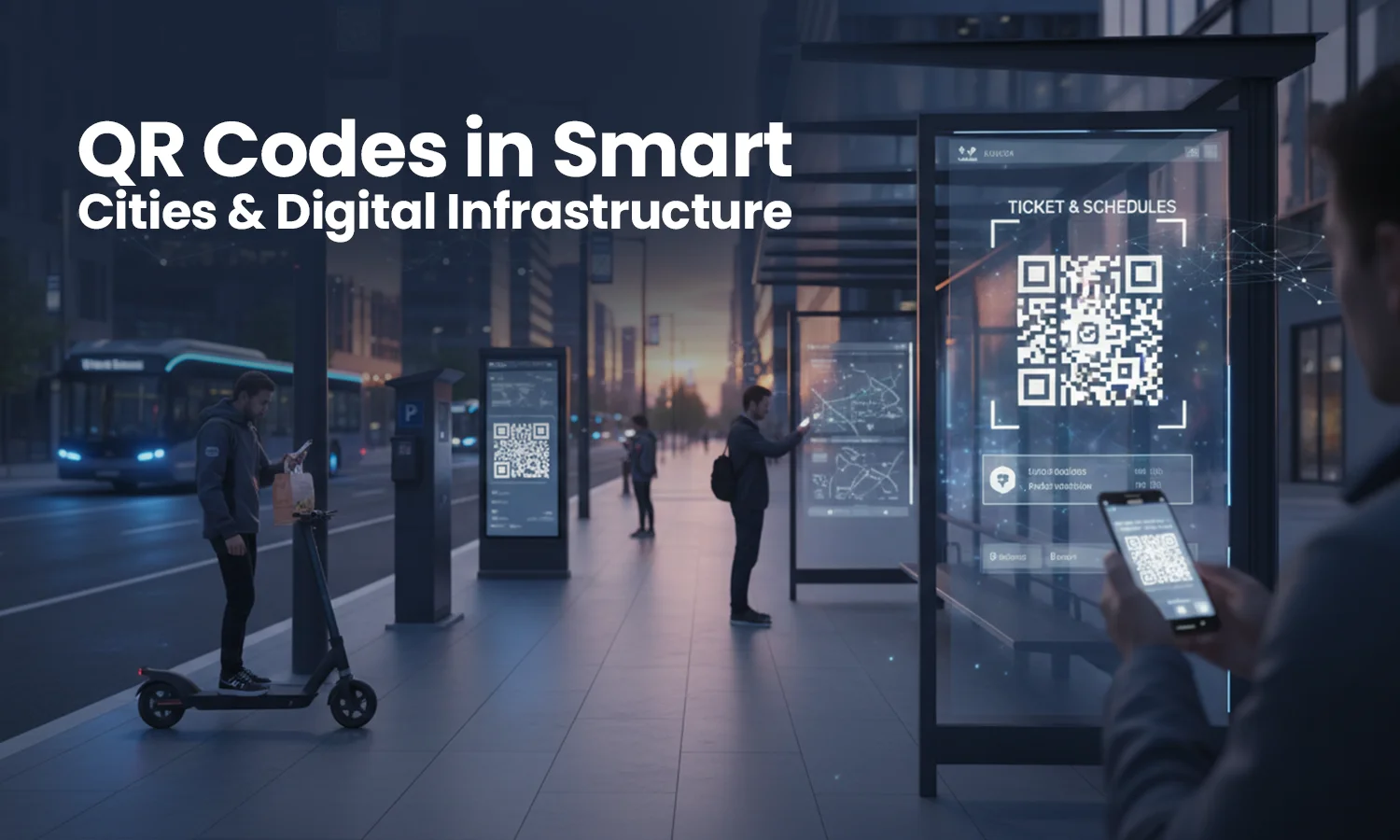
Managing a growing city is a tough task. As more people move to urban areas, the need for fast and reliable services grows. This is why QR Codes in Smart Cities have become a top priority for planners. By 2026, India aims to complete 100 Smart Cities, and qr code technology is the low-cost tool making it happen.
These codes turn physical spaces into digital touchpoints. From paying for a bus ride to reporting a broken street light, digital infrastructure is now more connected than ever.
What Are Smart Cities?
A smart city uses data and smart city technology to manage assets and resources efficiently. This includes everything from power plants and water supply networks to waste management and schools. The goal is simple: use smart city solutions to improve the quality of life for every citizen. In India, cities like Indore and Surat are already leading the way by using smart city applications to track garbage collection and monitor traffic in real-time.
How QR Codes Help in Public Services
Local governments are using e-governance technology to remove the need for long queues.
- Paperless Forms: Instead of filling out physical papers at a government office, citizens scan a code to fill out digital forms.
- Instant Information: QR codes on heritage sites or public buildings give tourists and locals history and maps in their own language.
- Utility Bills: Scanning a code on a water or electricity bill allows for instant payment through digital payment systems.
Key Insight
Studies show that digital tools like QR codes reduce service time by up to 40% in public service centers by minimizing paperwork and manual processing. This improves citizen satisfaction and city efficiency.
QR Codes in Smart Transportation
One of the most useful smart urban infrastructure tools is the integration of codes into intelligent transportation systems.
- Live Bus Tracking: Passengers scan a code at a bus stop to see exactly where their bus is and when it will arrive.
- Smart Parking System: Instead of searching for a coin machine, drivers scan a code at their parking spot to pay and set a timer on their phone.
- Metro Tickets: Many Indian cities now use a qrcode generator to issue digital tickets, which reduces the need for plastic tokens.
Contactless Payments in Cities
India has seen a massive shift toward digital payment systems. In smart cities, this goes beyond just shops.
- Public Toilets and Taps: Small fees for public utilities can be paid via a quick scan.
- Street Vendors: Even small stalls use a qr code generator to accept payments, helping the city move toward a "cashless" goal.
- Taxes: Property taxes and fines can be cleared by scanning codes on official notices.
QR Codes for Public Safety & Information
During emergencies, QR Codes in Smart Cities provide a direct line to help.
- Emergency Alerts: Codes on posters can give live updates during floods or heavy rain.
- Safe Travel: QR codes in taxis and autos allow passengers to share their location with family or the police.
- Health Access: Digital health cards with a qr code help doctors see a patient’s history in seconds during an accident.
Future of QR Codes in Digital Infrastructure
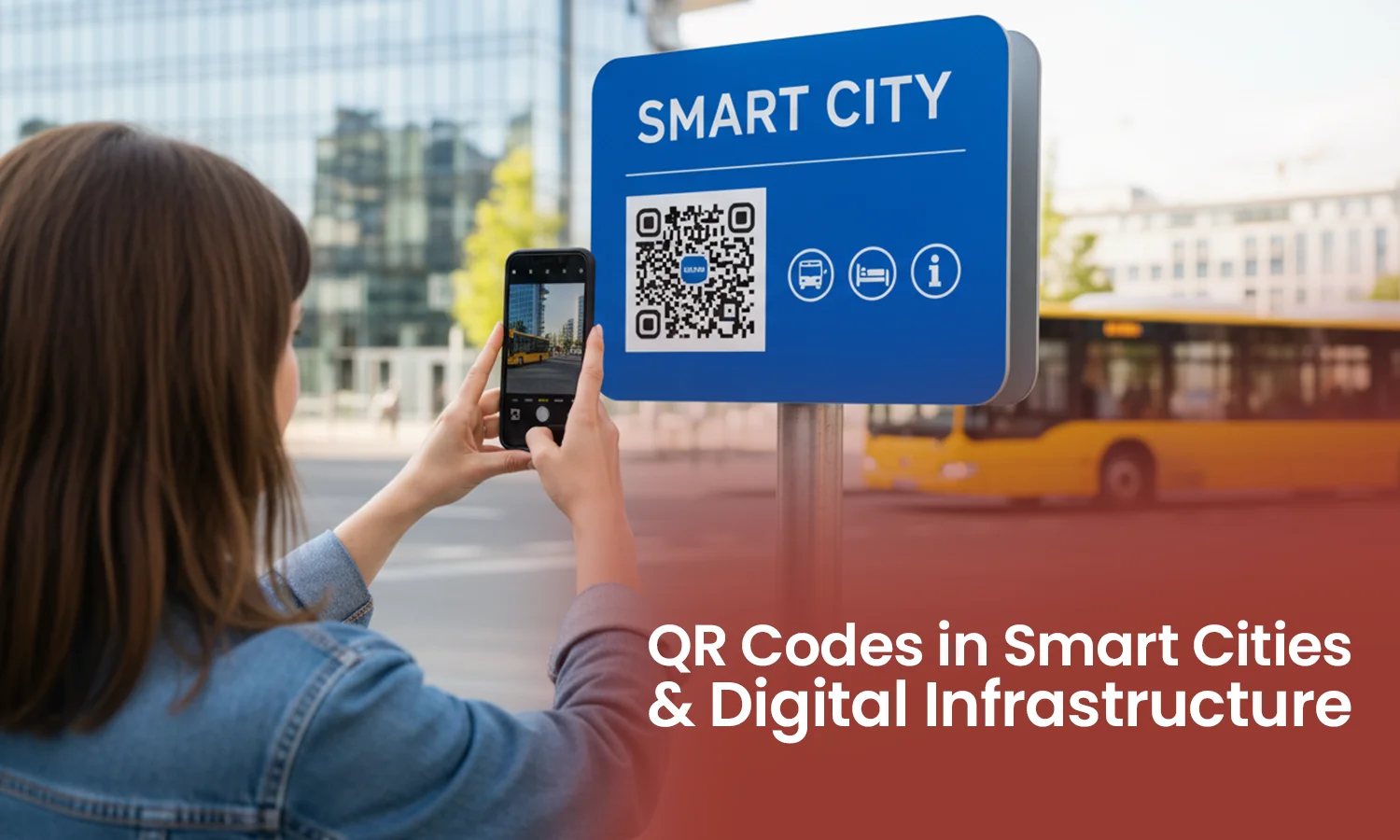
The next step for sustainable smart cities involves deeper integration. We will see more use of a dynamic qr code generator to manage city assets. For example, a code on a bridge could show its last safety check date or allow engineers to log repairs. As digital infrastructure grows, the qr codes we see every day will become even more useful and secure.
Highlights
- QR codes make city services faster and paperless.
- They support contactless and cashless payments.
- Used in transport, parking, and tourism.
- Improve communication between citizens and government.
- Low-cost and easy-to-implement technology.
“The cities of the future will be smart not because of technology alone, but because they use technology to improve people’s lives.” — Jan Gehl