A farmer’s market is more than a place to sell produce. It is where trust is built face to face, stories are exchanged, and buying decisions are often made in seconds. In crowded outdoor markets, vendors who simplify payments, share their story clearly, and stay connected after the sale usually see better results. This is exactly where QR codes market quietly change the way stalls operate and sell.
What Are Farmers’ Markets?
Farmer’s markets are physical marketplaces where growers and producers sell directly to consumers without middlemen. Products are usually harvested within 24 to 48 hours, keeping freshness high and supply chains short. Beyond fruits and vegetables, shoppers often find dairy, honey, baked goods, flowers, and prepared foods. The appeal lies in local sourcing, seasonal variety, and direct conversations with the people who grow or make the products.
Why QR Codes Markets Are a Game-Changer for Farmer’s Market Vendors
Using qr codes markets allows small vendors to compete with larger retailers without adding complexity. Instead of relying only on verbal explanations or printed leaflets, vendors can instantly show proof of sourcing, farming practices, and certifications. Fewer than 25 percent of modern shoppers fully trust food origin claims, and QR-based transparency helps close that gap. A single scan can show harvest dates, farm locations, or a short “meet the farmer” video that builds confidence and supports premium pricing.
Simplifying Customer Payments With QR Codes
Cash handling slows down busy stalls and creates room for errors. With qr codes markets, payments become fast and predictable.
- Customers scan once, enter the amount, and confirm payment
- No need for card machines or expensive hardware
- Instant confirmation removes confusion during rush hours
In busy markets, shorter queues directly prevent lost sales when shoppers are deciding quickly.
Using QR Codes for Powerful Tracking and Insights
One overlooked benefit of qr codes markets is data. Dynamic URL QR codes allow vendors to see when and where customers engage.
Examples of what vendors can track:
- Total vs unique scans
- Peak scanning times during market hours
- Which product signs attract the most interest
This data helps vendors decide what to highlight next week instead of guessing.
Bridging Offline Stalls With Online Experiences
A market visit is often brief, but qr codes markets extend the relationship beyond the stall. Vendors link scans to email sign-ups, recipe pages, or social profiles. A shopper who scans today can become a repeat customer online tomorrow. QR codes also support “endless aisle” selling, letting customers order out-of-stock items for later delivery instead of walking away empty-handed.
What Vendors Should Focus on at a Farmer’s Market
Success still depends on fundamentals:
- Consistent product quality and freshness
- Clean, well-organized displays
- Clear pricing and friendly interaction
qr codes markets do not replace these basics; they support them by reducing friction and saving time during busy moments.
Practical Ways to Use QR Codes Markets at Your Farmer’s Market Stall
QR Codes on Product Signs for Fresh Produce
Small signs can do more than show prices. Scans can reveal harvest dates, recipes for uncommon vegetables, or nutrition details. This adds value without cluttering the stall.
Adding QR Codes to Product Packaging
Packaging travels home with the customer. A scan can show storage tips, care instructions, or a short thank-you video. This keeps your brand present after the market ends.
QR Codes on Branded Merchandise
Tote bags, jars, or boxes with QR codes turn loyal customers into walking promoters. These scans can link to subscription sign-ups or online reorders.
Business Cards Enhanced With QR Codes
Instead of static cards, QR-enabled cards allow customers to save contact details instantly or visit a full digital catalog without typing anything.
QR Codes on Tabletop Displays
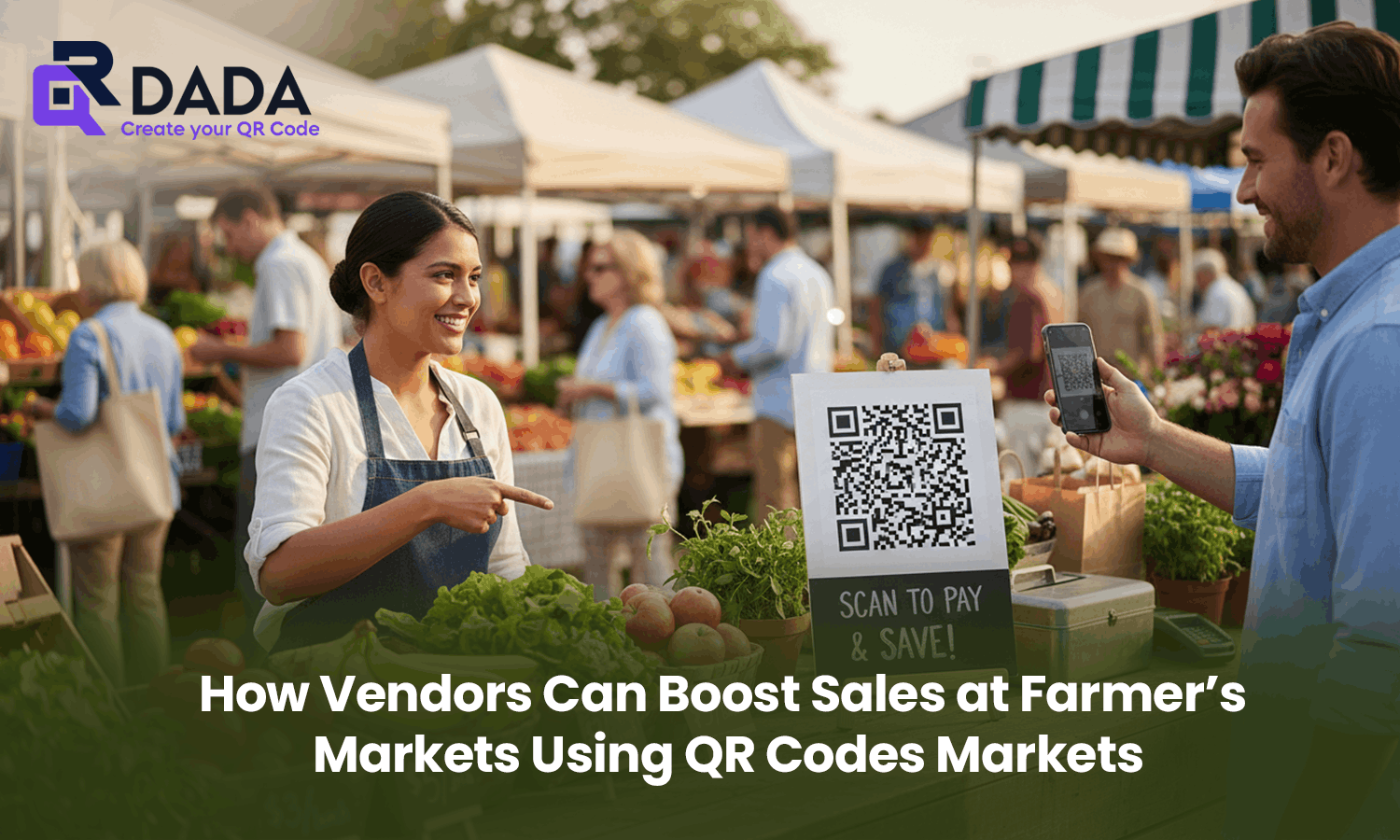
Placed near checkout, these scans can handle payments, loyalty sign-ups, or weekly specials. Clear instructions like “Scan here to pay” increase usage.
Large Board Posters Featuring QR Codes
Posters placed at eye level attract curious shoppers. These work well for storytelling, event schedules, or explaining farming practices in more detail.
Conclusion
Farmer’s markets reward vendors who make buying simple, transparent, and memorable. When used thoughtfully, qr codes markets help vendors move faster, explain more, and stay connected without adding manual work. Platforms like QR Dada support this by offering dynamic QR codes that can be updated weekly, tracked in real time, and reused across signs, packaging, and displays. The result is a stall that feels modern while still staying personal.
Key Takeaways
- QR codes reduce payment friction and speed up checkout
- Transparency through scans builds trust and supports premium pricing
- Tracking data helps vendors refine what sells best
- QR codes extend customer relationships beyond the market day
Dynamic QR systems reduce reprinting and manual effort