Choosing between RFID Tags vs QR Codes is a major decision for any business managing inventory or customer interaction. While both tools store and share data, they function on different technical levels. Picking the right one depends on your budget, environment, and how you want people to interact with your items.
What are RFID tags and how do they work?
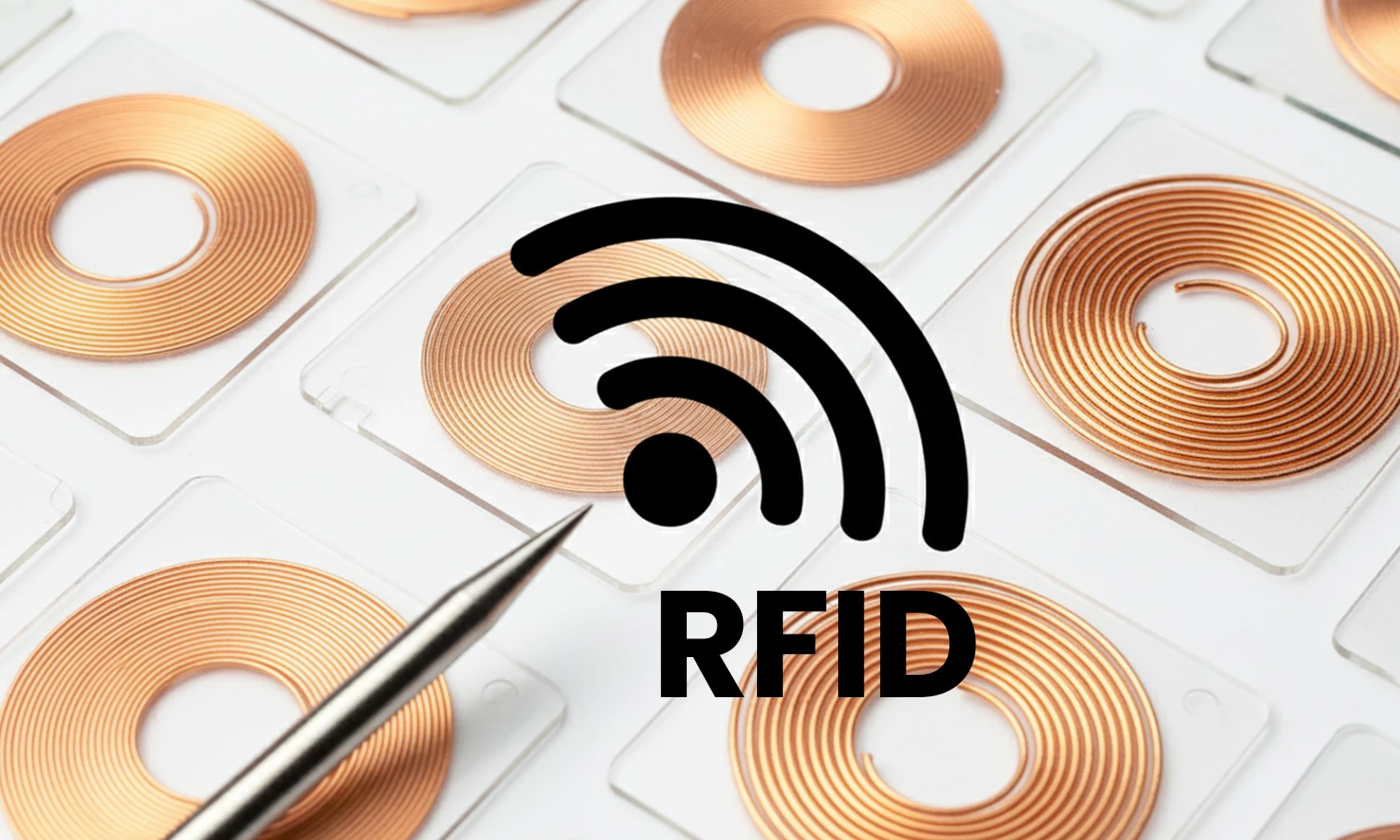
RFID tags are part of a wireless technology that uses electromagnetic fields to identify and track objects. Unlike a standard label, an RFID tag does not need a direct line of sight to be read.
A system consists of a tag, a reader, and a backend database. The tag contains a tiny antenna and a microchip. When the reader emits radio waves, the tag captures that energy to power itself and send data back.
There are three primary types of tags:
- Passive Tags: These have no battery and rely entirely on the reader power. They are common in retail apparel.
- Active Tags: These carry an internal battery and can broadcast signals over 100 meters.
- Semi-Passive Tags: These use a battery to run the chip but rely on the reader for communication.
What are QR Codes and how are they used?
QR Codes are two-dimensional barcodes that store data in a square grid of pixels. They act as a bridge between physical objects and digital information.
Because they store data both vertically and horizontally, they hold much more information than a standard barcode. Digital sensors, like those in a qr code scanner, locate markers in the corners to decode the pattern.
QR Codes use cases include:
- Marketing: Linking flyers to website URLs or videos.
- Hospitality: Providing digital menus at restaurant tables.
- Payments: Enabling quick transfers through apps like UPI.
- Connectivity: Sharing WiFi passwords without manual typing.
What are the major differences between RFID tags and QR Codes?
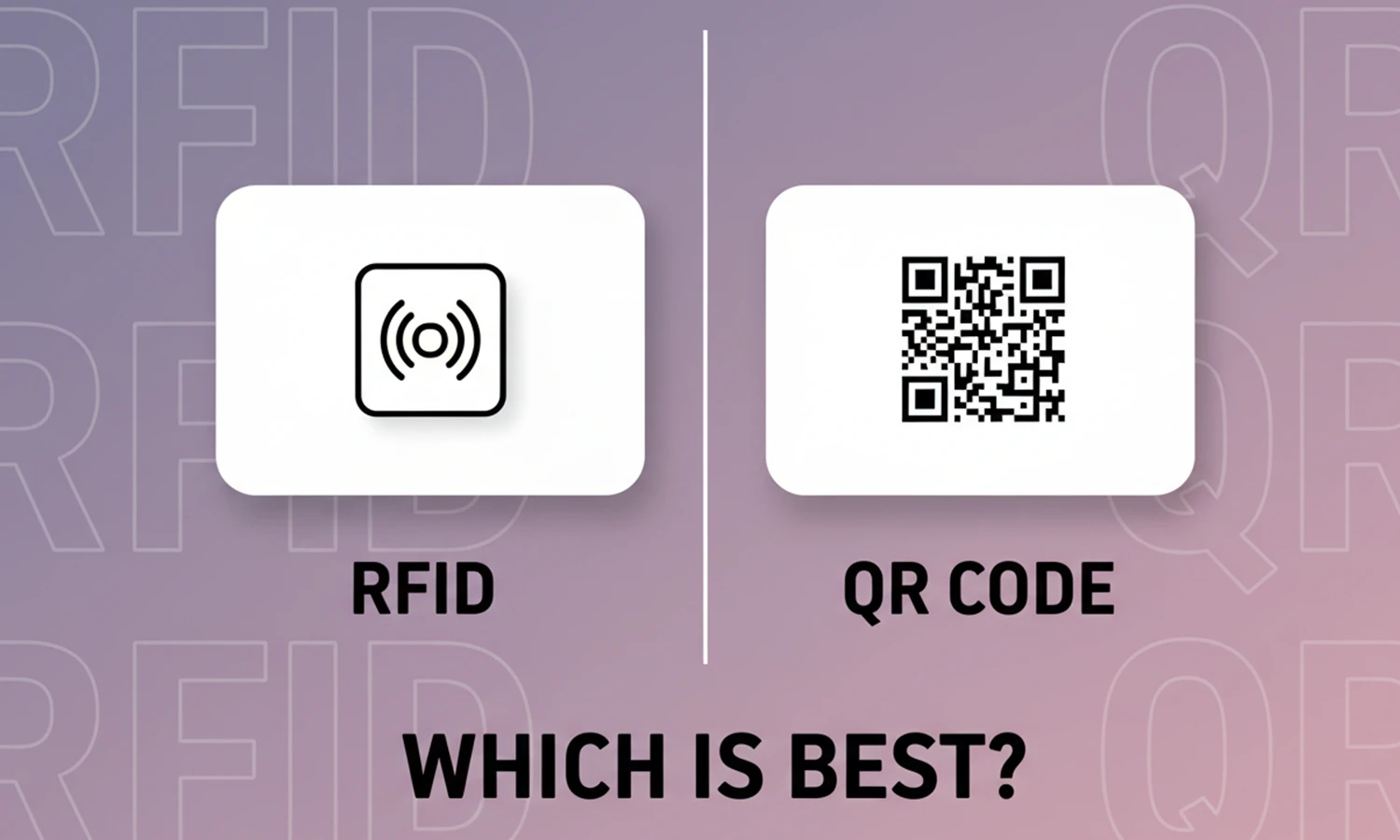
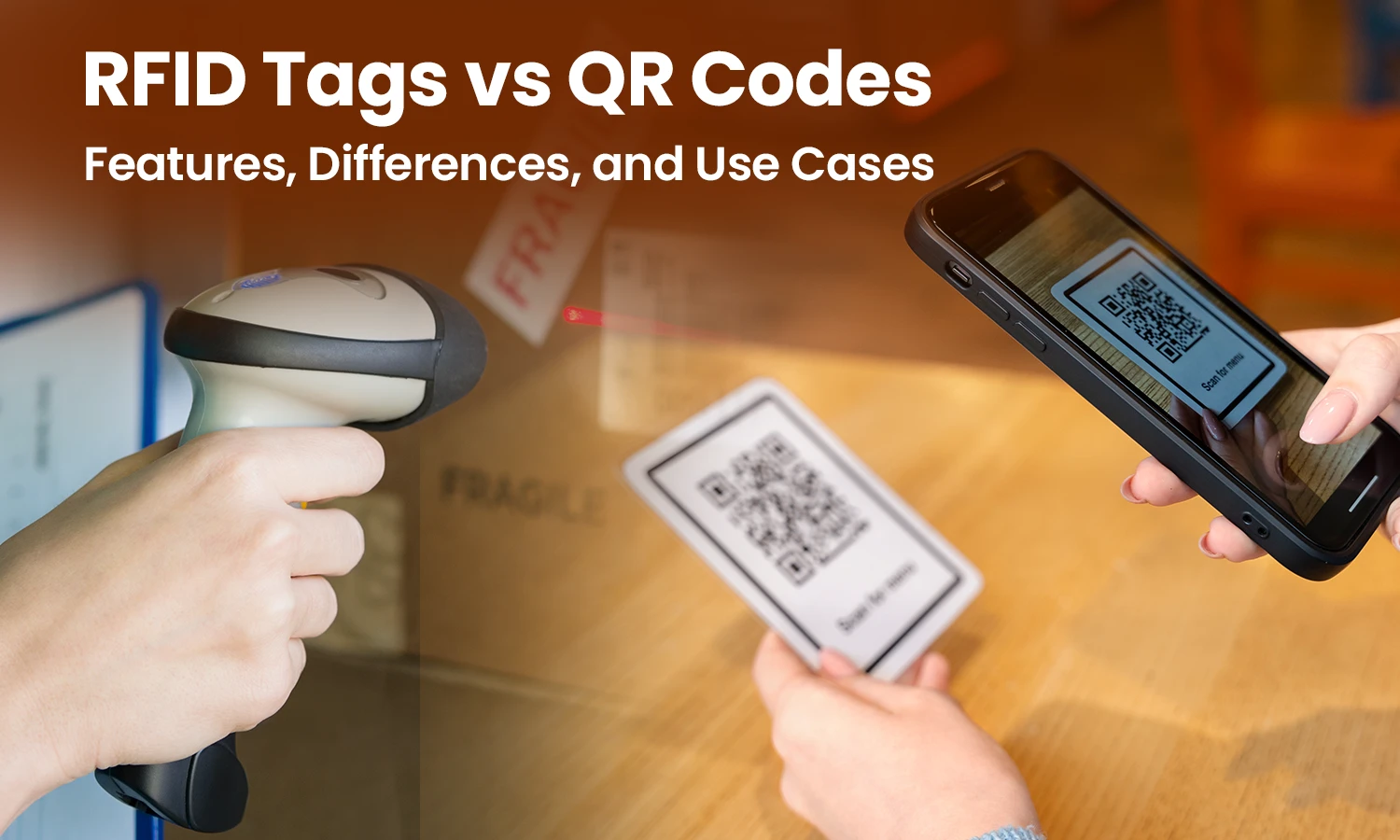
The main RFID vs QR Code differences lie in the scanning mechanism. QR Codes are optical and must be seen by a camera. RFID tags use radio waves that pass through materials like plastic or cardboard.
|
|
|
|
|
|
|
|
|
|
|
|
|
|
|
|
|
|
|
|
|
|
|
|
While QR Codes are affordable and easy to print, they can be slow in large warehouses. RFID tags use cases often involve bulk scanning, where a reader identifies hundreds of items in seconds.
Why are QR Codes a better choice for most applications?
For the majority of businesses, QR Codes are the superior choice because they are accessible to everyone. There are many benefits of QR codes that hardware-heavy systems cannot match.
- Zero Infrastructure Cost: You do not need expensive readers. Every customer already carries a qr code scanner in their pocket.
- Minimal Printing Costs: You can generate a code and print it on standard paper for almost nothing.
- Public Familiarity: Most people know exactly how to scan a code. This makes them perfect for customer-facing tools.
- Error Correction: High-quality codes remain scannable even if 30% of the label is scratched.
Unless you are managing a massive warehouse with thousands of moving parts, QR Codes offer the best balance of cost and utility. This is why choose QR Codes for modern marketing and retail.
Why should you use QRDADA (qrdada.com) for creating QR Codes?
The platform you choose for your technology matters. QRDADA is built for those who want their codes to look professional and work every time. It serves as a reliable QR code generator for any business size.
Using a dynamic qr code generator like QRDADA allows you to change the destination link even after you have printed the code. If your website URL changes, you simply update it in the dashboard without reprinting your signs.
QRDADA also offers deep customization. You can add your brand logo, change colors, and pick unique shapes to make your code stand out. Additionally, you get real-time analytics to see how many people are scanning your codes.
Key Takeaways
- QR Codes are optical and require a camera, while RFID tags use radio waves to scan through objects.
- RFID tags are best for bulk inventory tracking in large industrial settings.
- QR Codes are the most cost-effective solution for marketing, menus, and payments.
QRDADA helps you create custom codes that you can track and edit anytime.