
Deciding between Static vs Dynamic QR Codes is a foundational step in your digital strategy. While both types look similar, they serve entirely different purposes. Choosing the right one depends on whether you need a permanent link or a flexible tool that offers QR code analytics to measure success.
What Is a Static QR Code?
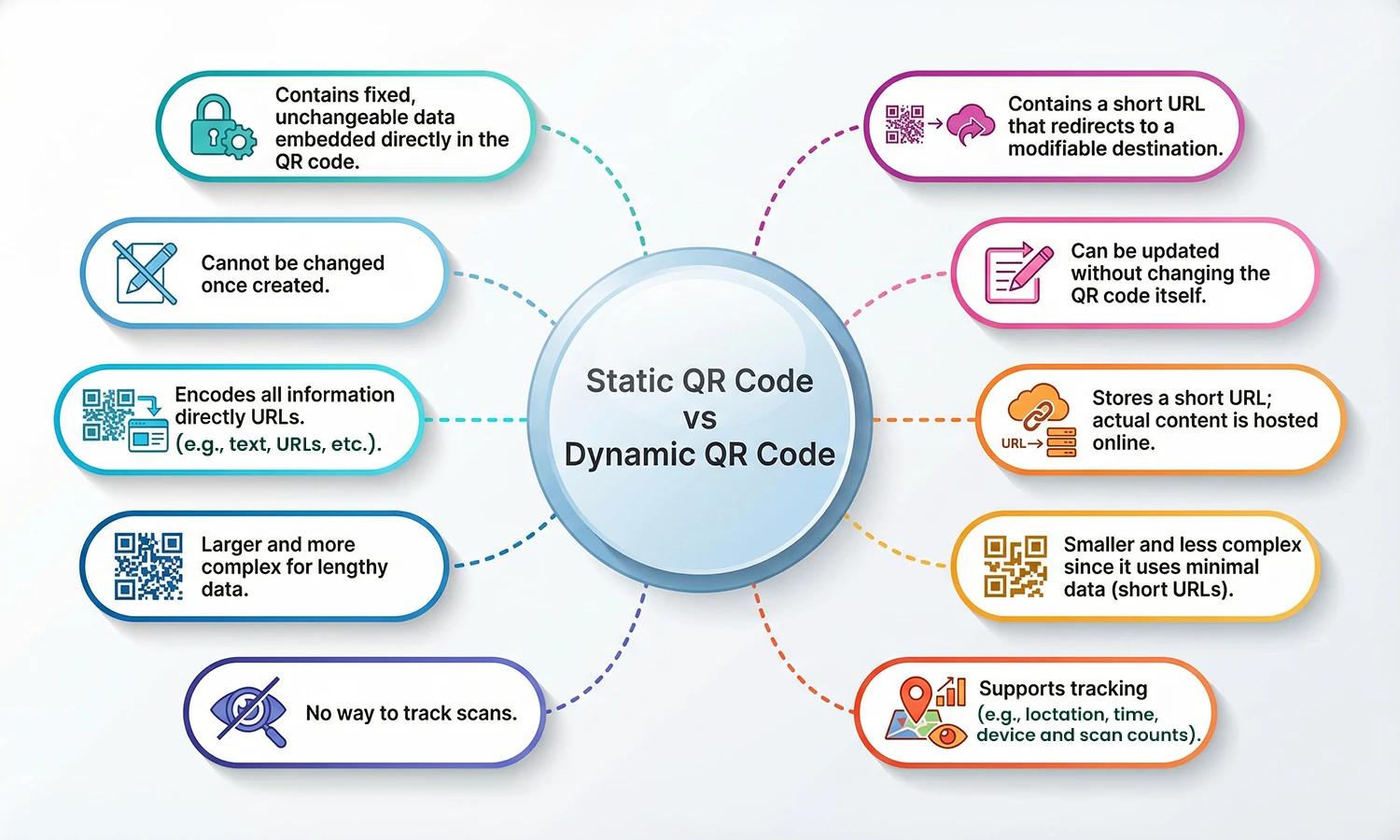
A static QR code is a "set-it-and-forget-it" tool. The information is hard-coded directly into the square pattern of the pixels. This means the data is fixed and becomes a permanent part of the image.
- How it stores information: Since the data is embedded in the pixels, the more information you add (like a long URL), the denser and more complex the pattern becomes.
- When it makes sense: These are ideal for one-time information that does not require an internet connection to be read, such as plain text or a WiFi password.
Advantages of Static QR Codes
- Free and easy to generate: Most basic generators offer these at no cost.
- No expiration: Since the logic is built into the pattern, the code works as long as the printed material exists.
- Ideal for permanent information: Perfect for personal use or static labels.
Limitations of Static QR Codes
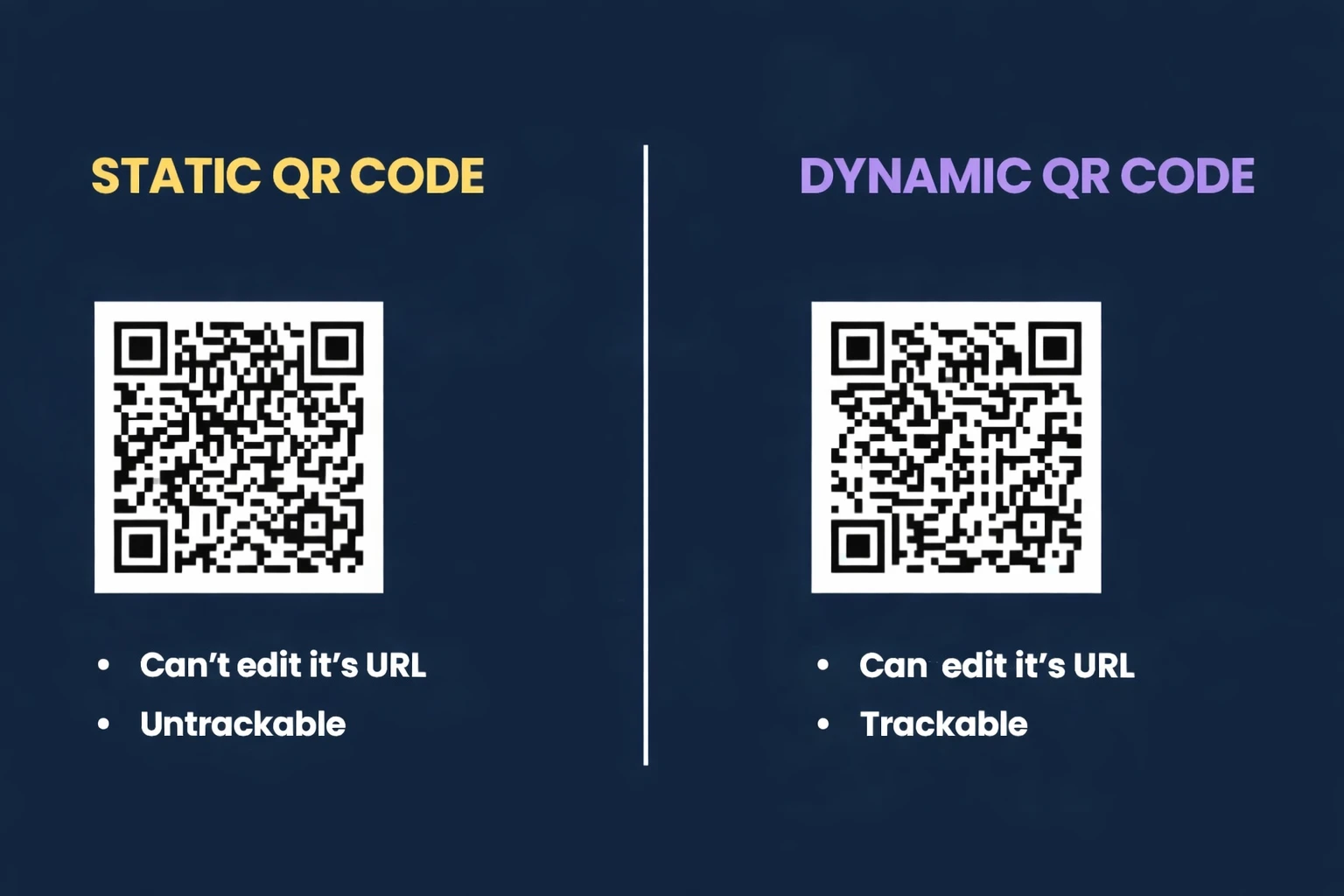
- Cannot be edited: If you find a typo or your website link changes, the printed code becomes a "dead link."
- No tracking: You have no way to know how many people scanned your code.
- High density: Long links create a "busy" pattern that is harder for older cameras to scan.
Common Use Cases of Static QR Codes
- Business cards: Sharing fixed contact details that rarely change.
- Product packaging: Permanent labels for serial numbers or basic product info.
- WiFi access: Allowing guests to join a network without typing a password.
- Instruction manuals: Linking to a permanent support document.
What Is a Dynamic QR Code?
A dynamic QR code is a professional tool where the data is not stored in the pixels. Instead, it contains a "short URL" that acts as a bridge, redirecting the user to your final destination.
- How it works: When a user scans the code, they hit the short link first, which then sends them to your website. This allows businesses to use editable QR codes that change on the fly.
- Why businesses prefer them: They provide business QR code solutions like tracking and flexibility that static codes lack.
Benefits of Dynamic QR Codes
- Editable destination URLs: Change the link anytime without reprinting your flyers or posters.
- Scan tracking and analytics: Access QR code analytics to see scan counts, locations, and device types.
- Campaign optimization: Supports A/B testing by changing destinations to see which landing page performs better.
- Simpler patterns: Because they use short URLs, the pixels remain large and easy to scan.
Drawbacks of Dynamic QR Codes
- Subscription-based: These usually require a paid plan through a platform like QR Dada.
- Account dependent: You must maintain your account to keep the redirects active.
Popular Use Cases of Dynamic QR Codes
- Digital marketing: Changing a promotion link every week while using the same poster.
- Restaurant menus: Updating prices or daily specials without replacing table standees.
- Events: Using QR codes for events to track registrations and attendance in real-time.
- Product authentication: Tracking a product's journey through the supply chain.
Static vs Dynamic QR Codes: Side-by-Side Comparison
|
|
|
|
|
|
|
|
|
|
|
|
|
|
|
|
|
|
|
|
|
|
|
|
Why Dynamic QR Codes Are Better for Growth-Focused Businesses
If your goal is to see a return on investment, you need trackable QR codes. Using a platform like QR Dada gives you the insights needed to understand customer behavior. You can see which geographic locations scan your codes the most and at what time of day, allowing for data-driven decisions.
How to Choose the Right QR Code Type (Decision Guide)
Before you print, ask yourself these four questions:
- Will the content change? If yes, go dynamic.
- Do you need analytics? If you need to see scan data, go dynamic.
- Is this for marketing? Marketing campaigns almost always require the flexibility of a dynamic link.
- What is your budget? Static is free; dynamic is a small business investment.
Decision Rule: Choose static for fixed, offline information. Choose dynamic for growth, tracking, and long-term flexibility.
Key Takeaways
- Static codes are permanent and cannot be changed or tracked.
- Dynamic codes allow for editable QR codes and provide deep QR code analytics.
- QR Dada offers professional business QR code solutions to manage and track your campaigns.
- For marketing, the ability to update a link without reprinting is a massive cost-saver.